Make a Spinning Top That Really Spins
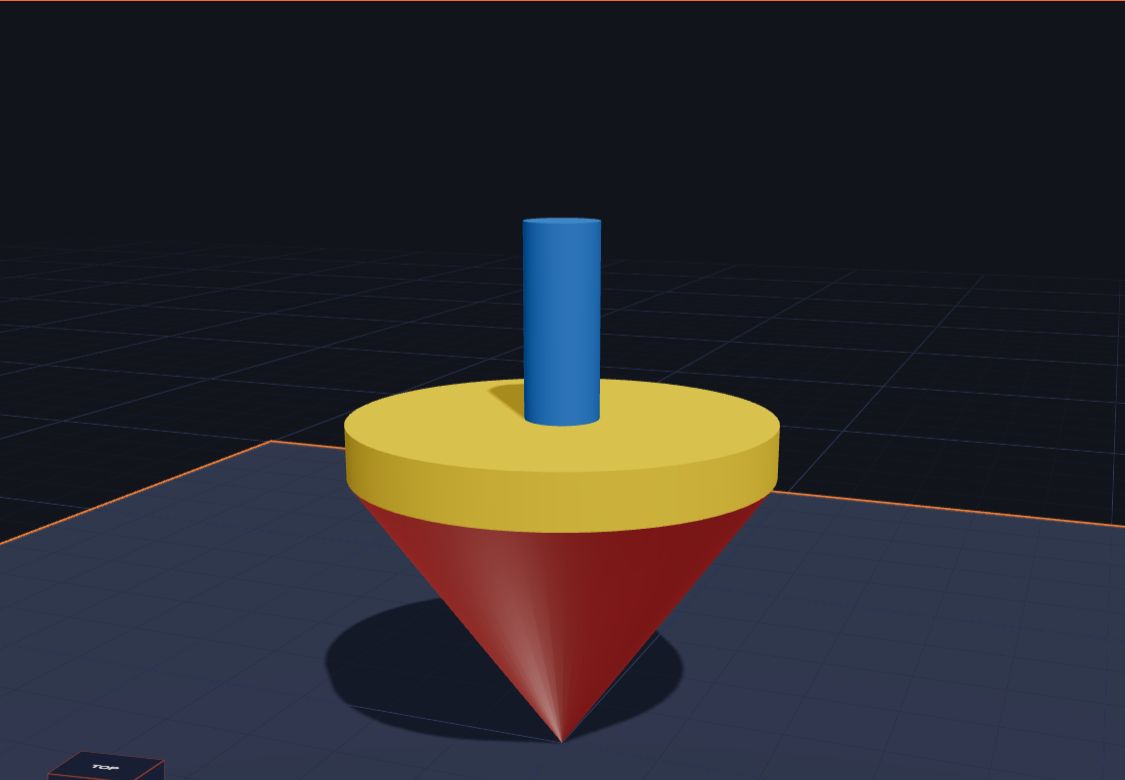
Spinning tops are one of the oldest toys in the world. Children have played with them for thousands of years. They are simple to make, but there's real science inside: why do some tops spin for ages, and others fall over straight away?
In this project you will design a spinning top from just three shapes. Then you will become a scientist and test which design spins the longest. It takes about 15 minutes to build.
What you need
- Kids 3D Lab (free, no account needed)
- About 15 minutes
- A stopwatch or a phone timer, for the test at the end
How a spinning top works
A top has three parts:
- The point at the bottom. It's the only part that touches the table, so it doesn't rub much as it spins.
- The body, which is heavy and wide. Once it is spinning, the weight keeps it going.
- The handle at the top. You twist it with your fingers to start the spin.
Step 1: The point
- Open Kids 3D Lab and click New build.
- Click Cone.
- Set Diameter to 40 and Height to 28.
- Pick red.
- Under Flip, click ⇵ Z. The cone turns upside down, so its point is at the bottom.
The cone now balances on its tip. That tip is where your top will spin.
Step 2: The disc
- Click Cylinder.
- Set Diameter to 40 and Height to 5. It's a wide, flat disc.
- Pick yellow.
- Click the cone, hold Shift, and click the disc.
- Click Put on top of the cone.
The disc sits on the wide top of the cone. The cone and the disc together make the body of the top.
Step 3: The handle
- Click Cylinder again.
- Set Diameter to 7 and Height to 18.
- Pick blue.
- Click the disc, Shift-click the handle, and click Put on top of the cylinder.
Your spinning top is finished! Turn the view and look at it from the side. It's tall and pointy at the bottom, wide in the middle and thin at the top.
Step 4: Check it and save it
- Call your build "Spinning top".
- Click Save.
- Click Export and look at the Ready to print? box.
- Click Download STL.
The science: why tops keep spinning
A spinning thing wants to keep spinning. Scientists call this momentum. The heavier the top is, and the further its weight is from the middle, the more it wants to keep going. That's why tops have a wide, heavy body.
But a top also needs to stay upright. If its weight is very high up, it wobbles and falls over quickly. If its weight is low, close to the point, it stays steady.
So the best tops are:
- Wide, so they keep spinning.
- Low, so they don't wobble.
- Pointy at the bottom, so they don't rub.
Be a scientist: test your tops
Real designers don't just guess. They make a few versions, test them and compare. Let's do that!
- Make three tops with different shapes:
- Top A: the one you just made. - Top B: a narrow one. Make the cone and the disc 25 wide. - Top C: a tall one. Make the cone 45 tall.
- Before you test, guess which one will spin the longest. Write it down.
- Print all three (or ask someone to print them for you).
- Spin each top three times and time it with a stopwatch.
- Write the times in a table and work out which top won.
| Top | Spin 1 | Spin 2 | Spin 3 |
|---|---|---|---|
| A: normal | |||
| B: narrow | |||
| C: tall |
Was your guess right? Why do you think the winner won?
Make it even better
A pattern on top
Put a Star or a Spiral shape on the disc, 1 mm high, in a different colour. When the top spins, the pattern makes a blur of colour.
Grip lines on the handle
Add a few thin Box shapes around the handle, like the lines on a coin's edge. They help your fingers grip it.
A rainbow top
Stack several thin discs in different colours instead of one yellow disc. When it spins, the colours mix!
Common mistakes
- The point is at the top. Did you flip the cone? Click ⇵ Z under Flip.
- The parts don't line up. Use Put on top of… for each part, so they sit right in the middle.
- The handle is too thin. A handle thinner than 5 mm can snap. Keep it at 7 mm or more.
- The top wobbles a lot. It may be lopsided. Check that every part is in the middle, with X and Y both 0.
Questions kids ask
Why does my top fall over?
It might be spinning too slowly, or its weight might be too high. Try a lower, wider design, and give it a stronger twist.
Which is better, wide or tall?
Usually wide and low spins longer than tall and narrow. But test it yourself. That's what scientists do!
Will the point print properly?
A sharp point at the bottom is tricky to print, because it touches the printer's plate in one tiny spot. A grown-up can turn the top over in the slicer app, so it prints with the handle at the bottom, and switch on supports. Another way is to print the cone and the top part as two pieces and glue them together.
Can I make it from other shapes?
Yes! Try a Ball cut in half, a Gem or a Dome for the body. Any shape that is round all the way around can spin.
For grown-ups
Spinning tops are a classic way to explore forces: momentum, friction and balance. The test at the end turns a toy into a fair experiment, with a prediction, changing one thing at a time, repeated measurements and a conclusion. That's the same process engineers use. See The Engineering Design Process for Kids for a lesson structure around it. When printing, the overhang under the disc needs supports in most orientations, or print the parts separately. This build is also one of the ready-made examples.
Keep reading
 Projects
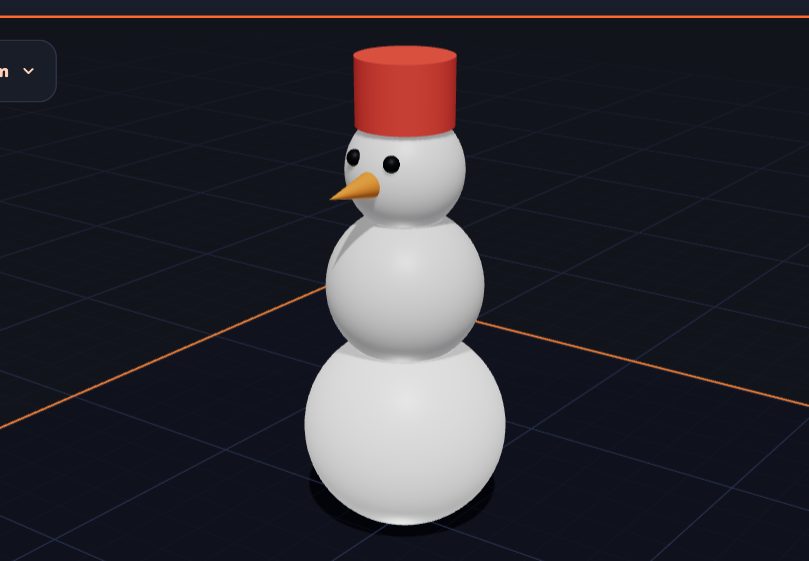
Build a Snowman by Stacking Shapes
Stack three balls, add a carrot nose and a hat. A fun first project that teaches you how to put shapes on top of each other.
5 min read
 Projects
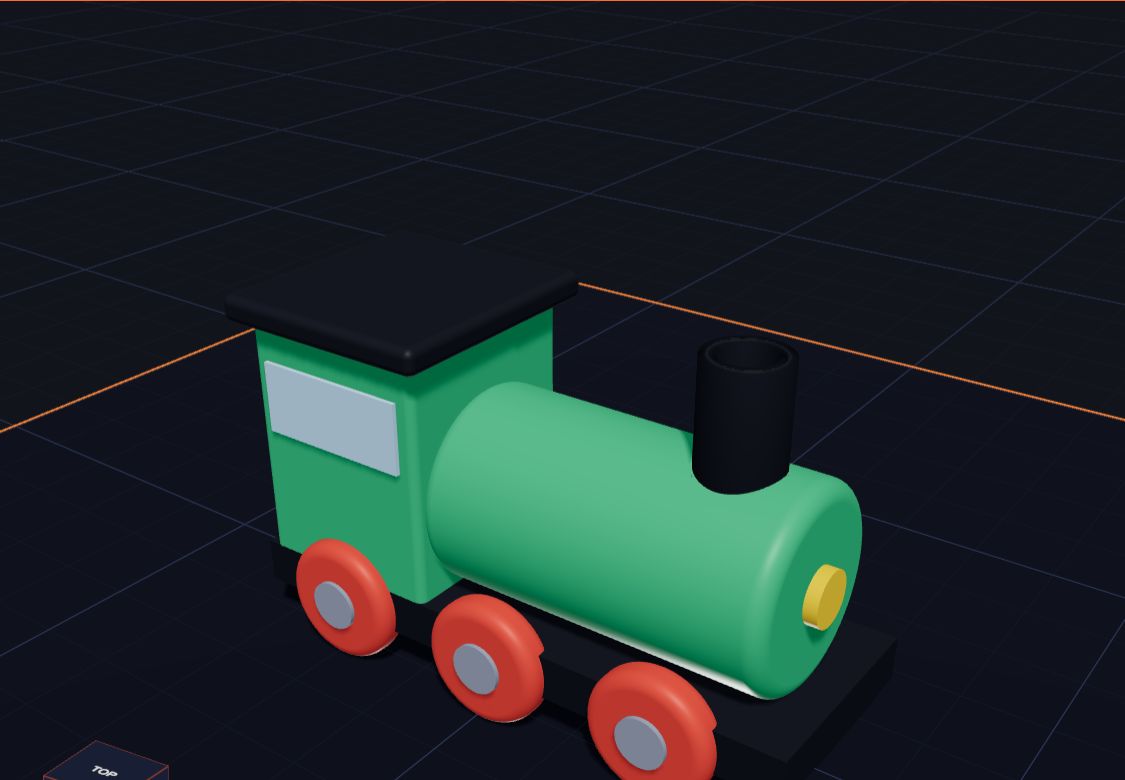
3D Printing Projects for Kids and Students: 15 Easy Ideas
Fifteen easy 3D printing projects and ideas for kids and students, from name tags and dice to cookie cutters and pen pots — plus STEM projects for school.
7 min read
 Projects
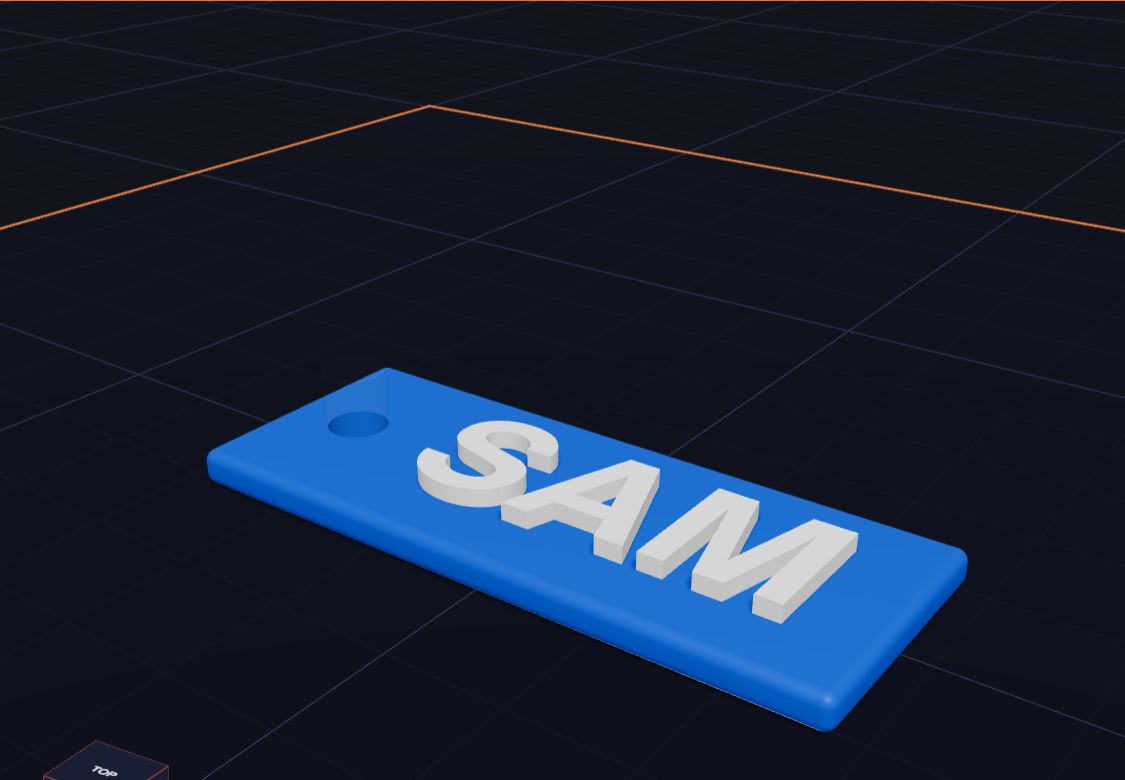
Make a Name Keychain, Step by Step
How to make a 3D printed name keychain, step by step — a tag, your name on top and a hole for the ring — designed free in Kids 3D Lab and ready for a 3D printer.
7 min read